A payment record is more useful than a single screenshot
A screenshot of a balance can show what you saw, but it rarely identifies the payment that created it. For a Zora deposit, record the submission date, amount, currency, method and transaction reference. Include the time zone if your bank and casino history display different clocks. This lets you distinguish two payments for the same amount without relying on memory. CasinoCan recommends keeping each transaction as a separate entry instead of combining a day’s payments into one unexplained total.
Compare the two records carefully
A banking entry and a casino entry describe different stages of the same journey. One can show an authorisation while the other is still waiting for confirmation. Match references where possible, then compare time and currency. Do not conclude that a debit and a temporary hold are two completed deposits solely because both are visible. If the entries are ambiguous, ask the payment provider about its own record and Zora about the casino credit. Each party can explain a different part of the process.
Prepare a support message that can be investigated
A useful message states what you attempted, what status is visible and what outcome is missing. For example: an illustrative deposit submitted at 14:10 is marked completed by the provider, but the Zora history still displays pending. Add the transaction reference and currency, not an accusation that assumes the cause. If a receipt is requested, use the operator’s secure submission route. Hide unrelated transactions and unnecessary account details where the accepted document requirements allow it. Never include passwords or authentication codes.
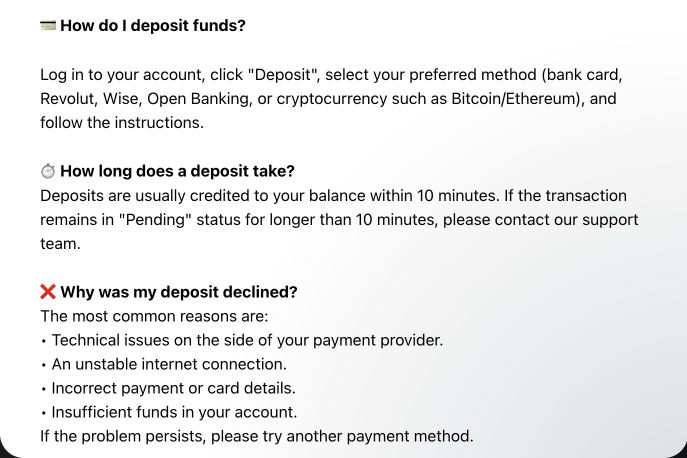
Keep the record until the question is settled
When support responds, preserve the case reference and the explanation alongside the original payment record. Check whether the response asks you to wait, supply a particular document or contact the provider. These are different next steps. A generic message that the case was received does not mean the payment has been credited. Once the issue is resolved, note the final status and received amount so later account questions do not reopen an already explained discrepancy. Follow your own secure document-retention practices.
Build a record that distinguishes two equal deposits
Consider two fictional payments of 25 EUR, submitted at 09:15 and 09:22. A note saying “50 EUR deposited today” loses the distinction between them. Give each its own line: local time and time zone, provider reference, casino reference if present, amount, currency and latest state. If the first credited and the second remains pending, keep those outcomes separate. The opening balance plus both submitted amounts is not a valid reconciliation because a submitted amount is not necessarily credited. Add a column for the amount actually received. This makes a missing credit visible without describing both payments as missing or incorrectly reporting a duplicate charge.
Correct a record without rewriting the history
A transaction can acquire a new reference after a handoff between the payment provider and the operator. Preserve the earlier reference and record which later identifier relates to it instead of replacing the first number. Similarly, append a reversal or adjustment as a dated event. The original observation may still explain why you contacted support. When sending a document, distinguish a receipt generated by the provider from a screenshot you created yourself; each proves different information. Record which file was supplied and when, but keep authentication secrets out of that list. Once the case closes, retain the explanation that connects the two records so a later statement can be reconciled consistently.